Agentic AI as a Practical Starting Point for Midsize Businesses
AI is quickly moving beyond simple chatbots. The next step is agentic AI, a class of AI systems that can help carry out multi-step business tasks, coordinate across tools, and support employees in getting work done.
For midsize businesses, this does not mean replacing teams or handing control to machines. It means using AI in practical ways that reduce repetitive work, speed up routine processes, and help employees focus on higher-value decisions.
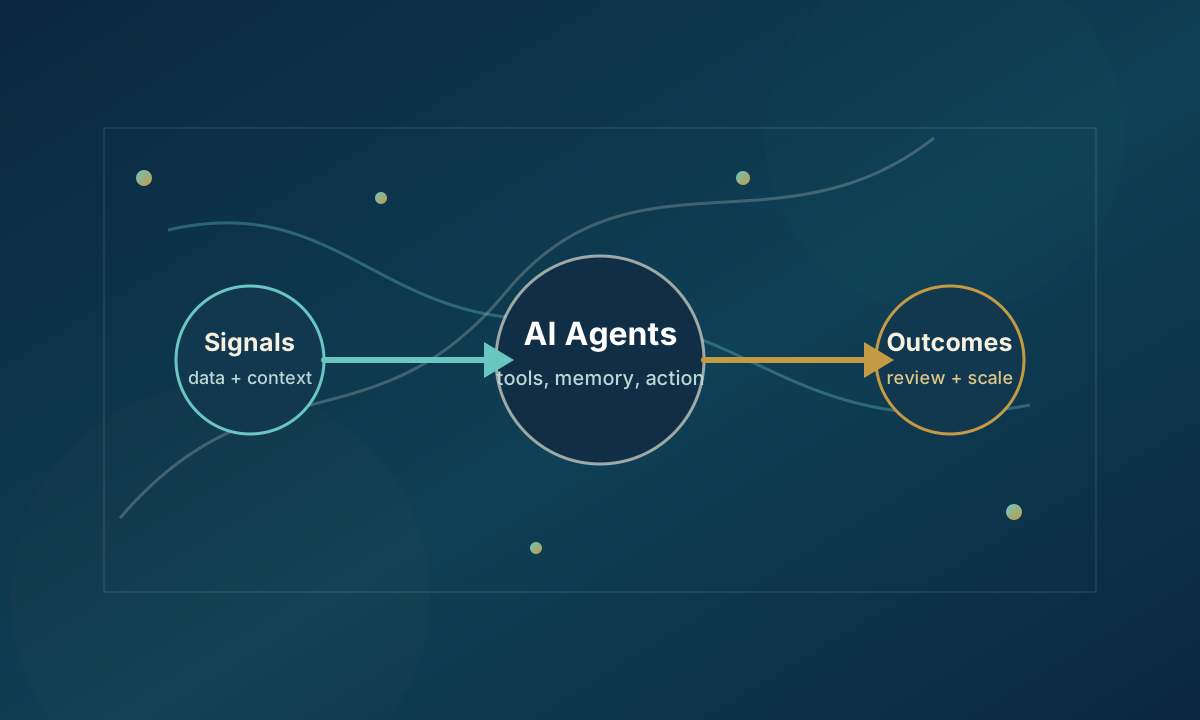
Many businesses are already familiar with AI assistants that answer questions, summarize documents, or draft emails. Agentic AI goes further. Instead of only responding to a prompt, an AI agent can help manage a workflow. For example, it might gather information from approved sources, prepare a report, route it to the right person, and flag anything that needs review.
The opportunity is significant. AI agents can support areas such as customer service, sales follow-up, finance reporting, operations, HR onboarding, internal knowledge search, and recurring research tasks. These are often the kinds of processes that consume time but do not always require complex judgment at every step.
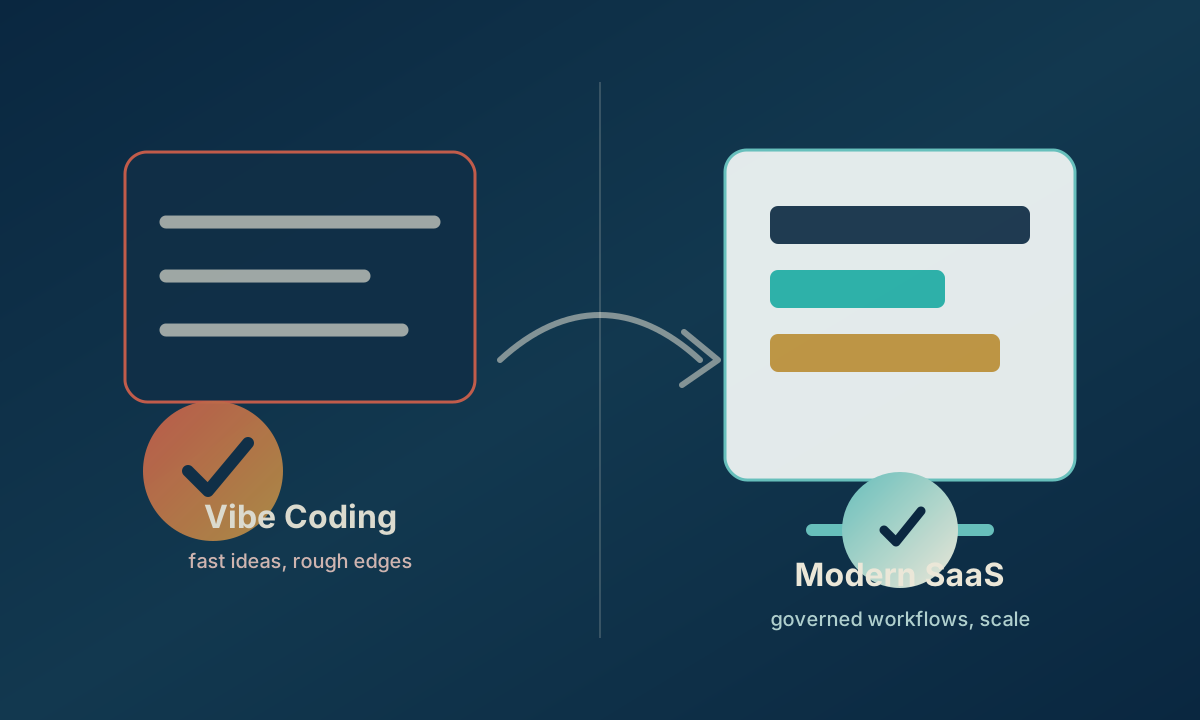
However, the real value comes from using agents carefully. A business should not simply connect an AI tool to everything and hope it improves productivity. AI agents need clear boundaries. They should have a defined job, access only to the tools and data they need, and a clear process for human review.
For most midsize companies, the best approach is to start small. Choose one workflow that is well understood, repetitive, and low risk. Good examples might include preparing weekly sales summaries, organizing customer inquiries, creating first drafts of internal reports, or helping employees find answers from company documents.
Before introducing an AI agent, map the current process. Identify who does what, where delays happen, what systems are involved, and where approvals are required. Then design the agent around that workflow rather than forcing the business to adapt to the technology.
Governance also matters. Every agent should have a business owner, a clear audit trail, and rules for when a human must approve the output. Managers need to know what the agent is doing, what information it can access, and how results are reviewed.
The companies that benefit most from agentic AI will not be the ones that chase the newest tool. They will be the ones that apply AI to specific business problems, measure the results, and build trust with employees over time.
A practical path is to begin with one useful agent, prove the value, and then expand gradually. Over time, that can become a small portfolio of trusted AI agents that support the business in measurable, manageable ways.
For midsize businesses, agentic AI is not just a technology trend. Used properly, it can become a practical operating layer that helps teams work faster, reduce friction, and improve consistency without losing human oversight.